Cart
0
Understanding the Fundamentals of Necklace Layering
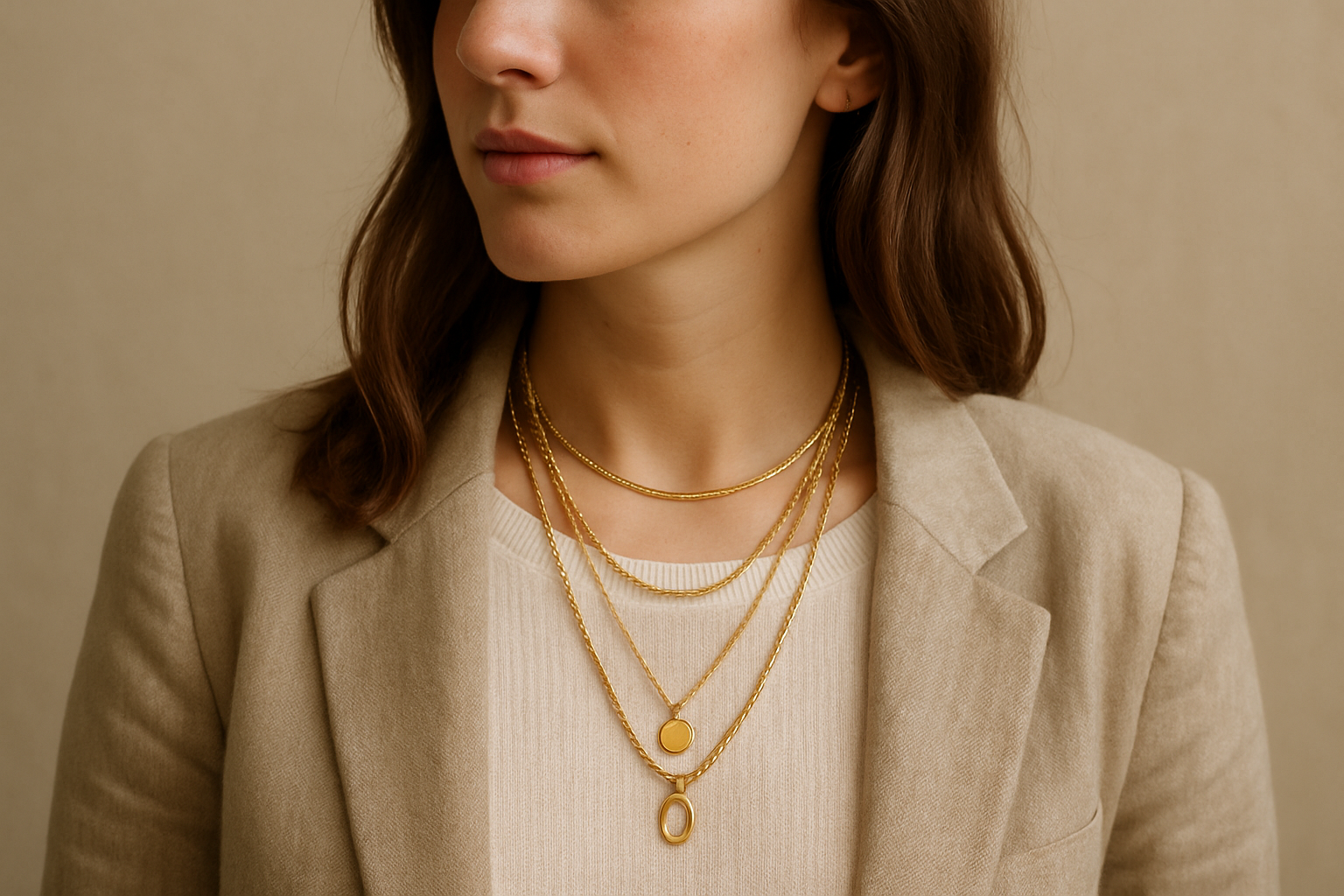
Mastering the art of necklace layering transforms ordinary jewelry into extraordinary statements. This sophisticated technique involves strategically combining multiple necklaces of varying lengths, textures, and styles to create dimensional, visually compelling ensembles that reflect personal style while maintaining harmonious balance.
The foundational principle revolves around creating visual hierarchy through intentional spacing and proportion. When you layer necklaces effectively, each piece should occupy its own distinct territory around your neckline without competing for attention. This creates what jewelry professionals call "breathing room" – essential negative space that prevents your layered look from appearing cluttered or overwhelming.
The Science Behind Successful Layering
Understanding proportional relationships forms the backbone of expert layering techniques. The most flattering combinations typically follow the two-inch rule, where each subsequent necklace sits approximately two inches below the previous piece. This mathematical approach ensures adequate separation while maintaining cohesive flow from your collarbone to your décolletage.
Visual weight distribution plays an equally crucial role. Delicate chains naturally gravitate toward shorter positions, while substantial pendants or statement pieces anchor longer lengths. This creates natural balance that feels intentional rather than accidental, elevating your overall aesthetic from amateur to polished professional.
Essential Tools and Components for Expert Layering
Building a versatile layering wardrobe requires strategic curation of foundational pieces that work harmoniously across multiple combinations. Your jewelry arsenal should include various chain styles, pendant sizes, and metal finishes that complement your personal aesthetic while offering maximum mixing potential.
Chain Varieties and Their Unique Properties
Different chain constructions offer distinct visual textures that contribute to layering success. Figaro chains provide bold, masculine appeal with their alternating link patterns. Cable chains deliver classic versatility with uniform, interlocking ovals. Snake chains create fluid, liquid-like movement that catches light beautifully when positioned as accent pieces.
Rope chains add substantial visual weight through their twisted construction, making them ideal anchor pieces for longer lengths. Curb chains offer contemporary edge with their flattened, interlocking design. Box chains provide geometric precision that pairs beautifully with modern, minimalist aesthetics.
Strategic Length Planning
Professional layering relies on predetermined length combinations that create pleasing proportions across various necklines and body types. Standard measurements include:
- Choker length: 14-16 inches for close neckline positioning
- Princess length: 18-20 inches for classic collarbone placement
- Matinee length: 22-24 inches for mid-chest positioning
- Opera length: 28-36 inches for dramatic, elongated statements
Mastering Color and Metal Coordination
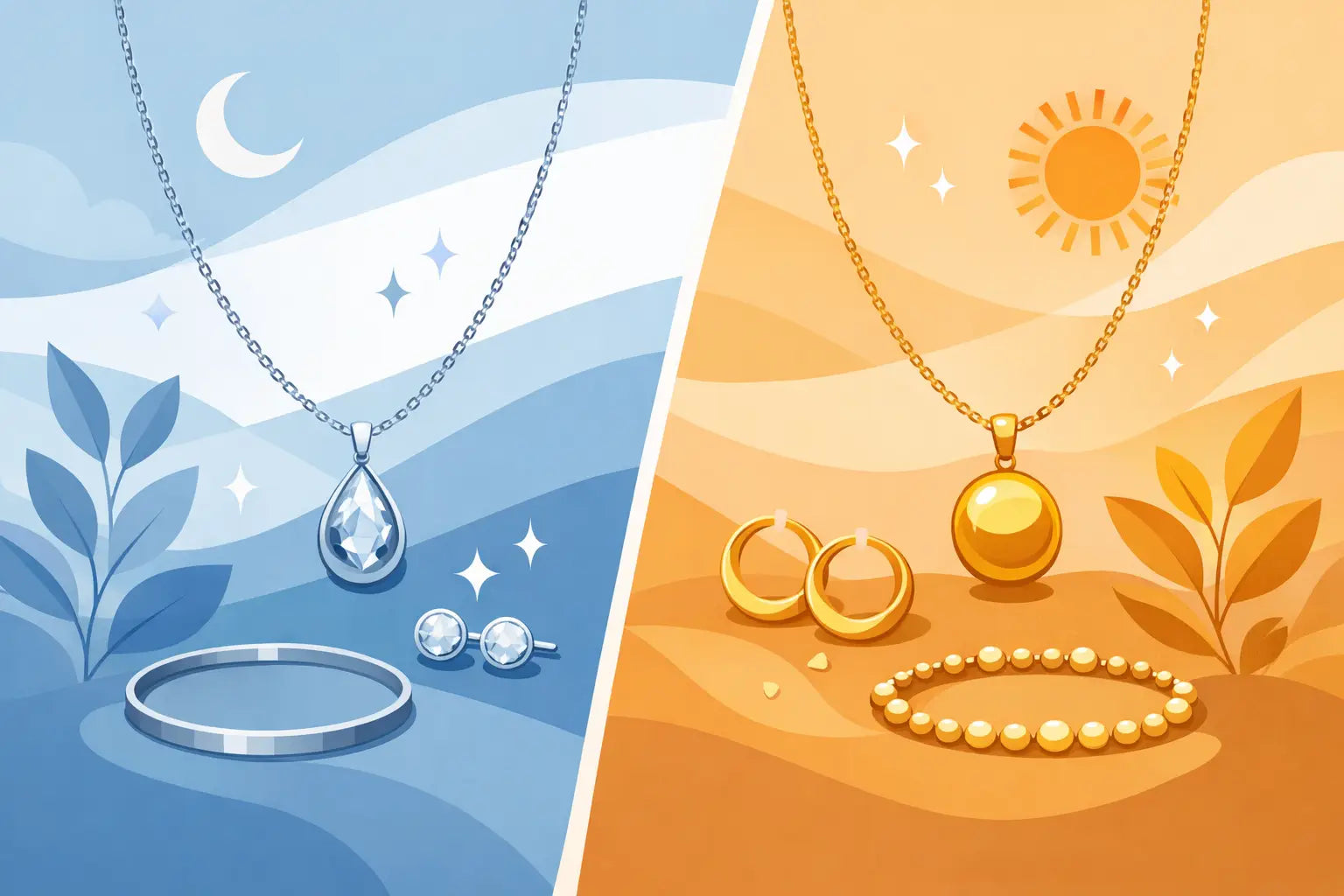
Contemporary jewelry styling has evolved beyond rigid metal matching rules, embracing mixed-metal combinations that reflect personal style preferences. However, successful mixing requires understanding complementary relationships between different metallic finishes and how they interact with your skin's undertones.
Warm-toned metals like yellow gold, rose gold, and copper naturally harmonize with olive, golden, or peachy skin undertones. Cool-toned metals including white gold, platinum, and sterling silver complement pink, blue, or red undertones. Understanding your personal undertone family guides metal selection for most flattering results.
Creating Cohesive Mixed-Metal Looks
When combining different metals, establish visual continuity through intentional repetition. Include each metal type at least twice within your layered combination to create balanced distribution rather than isolated, jarring contrasts. This technique creates sophisticated complexity while maintaining harmonious unity.
"The most compelling layered looks tell a cohesive story through thoughtful metal distribution and intentional spacing that respects each piece's individual beauty while contributing to the collective whole."
Transitional pieces like two-tone jewelry or pieces featuring mixed-metal elements serve as bridges between different metallic families. These versatile connectors make bold mixed-metal combinations feel intentional rather than accidental.
Pendant Selection and Positioning Strategies
Pendants serve as focal points within layered compositions, drawing the eye to specific areas while adding personality and meaning to your ensemble. Strategic pendant placement requires balancing visual weight, symbolic significance, and proportional relationships to create compelling narratives through jewelry.
Scale progression typically works most effectively when smaller pendants occupy shorter lengths while larger, more substantial pieces anchor longer positions. This natural hierarchy prevents top-heavy arrangements that can appear unbalanced or overwhelming to your overall silhouette.
Mixing Pendant Styles for Maximum Impact
Combining geometric and organic shapes creates dynamic visual interest through contrasting forms. Angular, architectural pendants pair beautifully with fluid, nature-inspired designs. This juxtaposition adds sophistication while preventing monotonous uniformity that can appear boring or predictable.
Textural variety enhances this contrast further. Smooth, polished surfaces reflect light differently than hammered, matte, or oxidized finishes. Incorporating various textures within your layered combination creates depth and dimensional interest that captivates viewers and elevates your styling expertise.
Advanced Layering Techniques for Different Occasions
Adapting your layering approach to specific occasions demonstrates sophisticated understanding of appropriate styling contexts. Professional environments typically call for subtle, refined combinations, while social gatherings allow for bolder, more experimental approaches that showcase creativity and personality.
| Occasion | Recommended Layers | Styling Notes |
|---|---|---|
| Professional/Business | 2-3 delicate pieces | Minimal pendants, matching metals preferred |
| Casual/Weekend | 3-4 varied pieces | Mixed metals acceptable, personality pendants welcome |
| Evening/Formal | 2-3 statement pieces | Focus on quality over quantity, incorporate gemstones |
| Festival/Creative | 4-6 eclectic pieces | Bold mixing encouraged, unconventional combinations celebrated |
Seasonal Adaptation Strategies
Seasonal wardrobe transitions require corresponding jewelry adjustments to maintain proportional harmony with changing necklines and fabric weights. Summer's lighter fabrics and open necklines accommodate more elaborate layering combinations, while winter's heavier textures and higher necklines necessitate streamlined approaches.
Layering over turtlenecks or high-necked garments requires longer lengths that clear the fabric entirely. This prevents unsightly bunching or uncomfortable pressure against your throat while maintaining the layered aesthetic's visual impact.
Troubleshooting Common Layering Challenges
Even experienced jewelry enthusiasts encounter occasional layering difficulties that require creative problem-solving. Tangling represents the most frequent frustration, particularly with delicate chains or pieces featuring intricate details that catch on neighboring necklaces.
Prevention strategies include proper storage techniques using individual compartments or hanging systems that maintain separation. When wearing multiple pieces simultaneously, putting on the longest necklace first, followed by progressively shorter pieces, minimizes tangling opportunities during the dressing process.
Addressing Proportion Imbalances
When layered combinations feel visually heavy or unbalanced, the solution often involves redistributing visual weight rather than removing pieces entirely. Swapping pendant positions or adjusting chain lengths can restore harmony while maintaining the desired layering complexity.
Sometimes the issue stems from conflicting undertones between pieces rather than structural problems. Introducing a transitional element that bridges disparate metals or styles can unify seemingly incompatible combinations into cohesive, intentional looks.
Frequently Asked Questions About Necklace Layering
How many necklaces should beginners start with when learning to layer?
Novice layerers achieve best results beginning with two or three carefully selected pieces that offer clear length differentiation. This manageable number allows for experimentation while minimizing overwhelming complexity that can discourage continued exploration.
Can vintage and contemporary pieces be successfully combined in layered looks?
Absolutely. Mixing eras creates compelling visual narratives that reflect personal history and style evolution. The key lies in finding common elements like similar metals, complementary colors, or shared design motifs that create continuity across different periods.
What's the best way to care for multiple necklaces worn together?
Gentle handling during removal prevents tangling, while individual storage maintains each piece's condition. Clean pieces separately using appropriate methods for their specific materials, as different metals and gemstones require different care approaches.
Mastering necklace layering transforms your jewelry collection into a versatile styling tool that adapts to any occasion or personal expression. Through understanding fundamental principles, strategic component selection, and practiced technique application, anyone can achieve expertly layered looks that reflect sophisticated style sensibilities while celebrating individual creativity and personality.